Monday, May 6, 2013

What I love about Malifaux Classic Part 3


What I love about Malifaux Classic Part 3

Occasionally inspiration strikes and I start to write and the words just come tumbling out. I figure if this happened more often in writing fiction I might actually be a published writer at this point. I hear that if you just keep pounding away at the keyboard you could eventually get better and people might want to read your drivel. Instead of going that route, I stick to the more mundane vanity projects such as this blog. Here we have the third and Final part of my look at why I love Malifaux Classic.

I have to admit that through the writing of this series of articles I have become emotionally conflicted overall. I suspect that there will be a fair amount of doom and gloom spouted once Malifaux V2 is released to the public beta, but I also believe that some portion of the community will push forward. I am not sure yet where I will end up, either trying to cling to Malifaux Classic or moving with the herd to the stockade Wyrd wants us to dwell in. I strongly suspect that the number of players for Malifaux Classic will dwindle over the future regardless, eventually making us extinct. Only time will tell, but I am looking forward to really comparing what is finally released to the game they have built to date.

So, what are the remaining portions of the article on what I love about Malifaux? These last few portions are some of the more innovative (in my opinion) and then I close up with a look at my recent loves in the Masters I have been playing and a final thought.

Soulstones
Soulstones are an interesting mechanic to the Malifaux game, and something that is fairly singular to Malifaux itself. I love that soulstones are an additional resource to track in the game that are limited to just a small subset of models overall. This provides a fantastic way to really separate the more powerful and special models in the world as thier models play on the table. One of the things that occurs is soulstones provide a potential increase in power for those truly influential characters via a mechanic where you can use a soulstone to flip an additional card in a duel to add to your total. I really appreciate both sides of this in the game. On the one side this allows a model to combine their statistic, a cheated high card, and the additional flipped card to create a duel that the normal run of the mill schmuck just cannot compete with. In this way the soulstone using model demonstrates their superior nature within the mechanics of the game. This is just cool in my opinion, and it really only works against "minion" type models. Honestly, this is one of the reasons I see that the "Masters" and true powerful characters in Malifaux have reached their stations within the power structure of their organizations. The second thing the soulstone mechanic allows is the ability for a soulstone user to be potentially competitive in "unwinnable" situations through some luck. One example of this is Colette using Magicians duel on the esteemed Von Schill. Colette is a caster with the very strong cast stat of 7 while Von Schill is a manly man who eschews magic with his paltry cast stat of 3. If Von Schill was required to perform a magicians duel with Colette relying simply on his stats he would be hopelessly outclasses and wrecked within the game. While this is likely to happen anyway, with the use of additive soulstones Von Schill is able to pull a proverbial Rabbit out of the Hat and actually could succeed against the Mystical Colette. These moments may be rare, but they become real Wow moments when they happen. Soulstones provide a nice mechanic for the game where lesser models can pitch their statistics and abilities against each other, but a soulstone user will always have an edge that the "normal guy" doesn't.

Dual Faction Masters
Malifaux Book 4, Storm of Shadows introduced a new type of model to the game, dual faction models. These were models who could operate effectively in two different factions of the game and they were cool. While there are some great minions in the game, I really like the Dual Faction mechanic for the Masters of the game. Dual faction masters for Book 4 were all part of the Ten Thunders faction which was newly introduced and then part of another one of the four primary factions. When it came to the masters, I felt this mechanic really demonstrated their back story of infiltrating the existing Malifaux organizations while still having ulterior motives they were working on accomplishing. This really rang true with me, as each of these Master's had part of their back story written to show that while their ultimate allegiance was to the Ten Thunders, they each had a compelling reason to work to goals of their secondary factions as well. This was further reinforced with their abilities, showing a split in their allegiance and how they worked well in two different situations with different crews. Each was able to bring along their faction specific allies when they worked for Ten Thunders, which to me represented a potential surprise to their allies who suddenly realized they were no longer working for the Guild or the Neverborn but were helping out this new organization. Keltheos and Nerd Elemental really hit the proverbial ball out of the park with the thought that went behind building these dual faction masters and how the models operated with different crews in game. Even those masters that may work better in their non-Ten Thunders faction were compelling with backstory to show why thier allegiance was deeper to that other faction. Others worked equally well as Ten Thunders or as non-10T, and worked differently when played in opposing factions. Overall, this was really well done and pushed it into the bits of Malifaux I love.

Dual model masters
Malifaux started in book 1 with a Master who was actually two models on the table. This was repeated in book 2, then again in Book 4 in slightly different ways. The tie between two masters was something that is built into the fluff and abilities in Hordes, but was not realized anywhere near as well as Malifaux has accomplished it. Viktoria in the Malifaux story was a bounty hunter who came through the breach and was "copied" by a Neverborn Doppelganger. She was able to slay the evil spirit of the Doppelganger while allowing the copy of herself survive. In the game this deep connection of a copied Master was demonstrated through a mechanic which allowed you to actually field both models in full master capacity on the table and make use of their interchangeability. The designers were able to do this in a truly unique and balanced fashion, and allow a real change in game play from other games.  Book 2 followed this up with the second dual model master with the Dreamer and Lord Chompy Bits. Here we are introduced to a child, who while difficult to remove is not really hard to kill once you find a way to pin him down. This child is not really able to impact the world directly in the game, but can bring about the appearance of the very scary Lord Chompy Bits who is a very direct engagement threat. The two models are linked together in how they operate on the board, unable to exist without the other and operate as a linked pair. The way the rules were implemented really demonstrated the interdependence of the two models, who were still very separate and but tightly tied together. This interdependency idea was taken a step further in Book 4 when we are introduced to Jakob Lynch and Huggy. When they are designed, Huggy is the actual master while Jakob is built similar to a slightly more powerful totem overall. The difference with this dual master combo is that their roles are reversed and Huggy has the totem rule to demonstrate that his entire existence is tied to Jakob's well being. While Huggy can be killed and returned to the game multiple times, if Jakob is removed both models are removed all together. This twist on the dependance mechanic combined with the dual master nature of the models was genius in its implementation.

Final Thoughts
Ok, I am going to juggle around the order of the last two sections here a bit. I want to first thank everyone for their feedback over this article series, it is very humbling and greatly appreciated. Many of you have pointed out that there is no discussion of a comparison with Malifaux V2 in this article series. This is very intentional, as I really wanted to focus on what I love about Malifaux. I wanted to do this for a variety of reasons, not the least of which is that I am unhappy with the direction Malifaux V2 is taking. I really love Malifaux Classic and this series really helped me refocus on the areas that I love and why I love the game. As an interesting aside, it seems to have helped others who know me gain a deeper understanding that I actually enjoy this game (and am more invested in this game) than they previously realized. Despite what my wife says, I could write just as long about my love and passion for her or my family as I did here!

That said, I am not able (yet) to speak about the specifics of what I do not like in Malifaux V.2. I am continuing to provide very limited feedback to the Wyrd team via playtesting. The feedback I have received from Wyrd is that my comments and stance on Malifaux V2 is negative to the point of being disruptive to the playtest in general. I have been told that if I did not tone back my negativity I would be removed from the playtest.

***Redacted due to warning of NDA violation***

The public will be able to make their own opinions on the good and bad nature of this on and after May 31. At that time I will have the ability to be much more open and detailed about my opinions. Until such time, I am continuing to play Malifaux Classic and really enjoy the game. Everything in these articles is clearly my opinion, and should be taken as one persons opinion.

Favorite Masters to play and Why
After this much writing I wanted to take a little bit to talk about the Masters I love most right now. Anyone interested in seeing what my currently Malifaux collection looks like can use the link at the top of the page for a full list. I have actually played every Master on that list to some extent, with the exception of Ophelia who I need to get on the table. Throughout my experience in Malifaux, there is a list of Master's who really resonated with me overall. Here is that list, along with a small blurb about why.

Dreamer
It is fairly well known that Dreamer is my favorite model and master in the game. I love the fluff behind this guy, and love the idea of Lord Chompy Bits and how he interacts with the little boy who is the dreamer. I went so far as commissioning the very talented Garden Ninja Studios to sculpt me a custom Dreamer model as Max from Where the Wild Things are.  I love the idea behind being able to deploy Dreamer on the table alone on turn 1, look at your opponents crew full of the baddest Malifaux has to offer and think to yourself... Yup, that's fair. This is not a comment about gaming balance as much as a quote from EricJ on a D6G episode early on. It really speaks to the use of the bury mechanic that Dreamer manipulates to manifest his crew of nightmares within the game. Overall his playstyle, theme, back story, and mechanics all came together for me as one of the best experiences in the game.
Yan Lo
I cannot express how much I have enjoyed playing Yan Lo since getting him on the table. I have not even begun to play him with his full compliment of a crew, lacking Toshiro from the line-up. Originally I heard about how Yan Lo would work at a high level and thought the idea of a Master animating constructs with spirits was an incredibly cool idea. Honestly, I was expecting more of a scene from Bedknobs and Broomsticks than what he ended up being. I finally got to put him on the table and start to play him and while he works differently than I originally expected, he is as awesome to play as I expected. Yan Lo's flexible in game play style via the use of his Chi and Path mechanic is incredibly enjoyable for me. I really like progressing him down different paths based on what is happening in the game and seeing how they all work out. In addition, his Ten Thunder's centric crew works really well for me, both when I take living models as the majority and when I load up on undead and ancestors. Yan Lo catapulted up my list of favorite masters far quicker than any other master in the game.
Colette
Colette was a surprise to me, I did not expect to like her when I picked her up at Gencon. I liked the way the models looked and had used some of my volunteer compensation to grab her full showgirl crew. I had played against Colette several times and did not think I would really enjoy her play style within the game. When I got back the painted models I felt compelled to put them on the table and try them out. This was one of the best decisions I have made in the game to date. Colette is all about trickery and movement in the game, being able to quickly move around the table by switching with the other models in her crew. I have heard a lot about the Coryphee being the foundation of a Colette crew, and while its a great model I actually prefer to play Colette with just groups of showgirls (not Coryphee). She is so much fun to play and has such a great look that even her complexity is something I feel can be overcome. I have especially enjoyed watching my daughter learn to play Colette, and pick up the mechanics of the game far quicker than I expected.

Pandora
I discovered at the recent Adepticon that I am apparently known publicly as a Pandora player. I would like to be surprised by this, but I just cannot bring myself to be overly surprised. Honestly, I am incredibly flattered to have become known for playing her and playing her well in the game. Pandora is seen by many players as a completely negative play experience. She is considered over powered by many players as well. What I find most interesting here is that she is also a book 1 master, in a community that considers many of the book 1 masters to not be competitive with book 2 and beyond masters. Overall, I do not enjoy the NPE perception of Pandora, but I do enjoy how she works. I actually enjoy playing both with and against Pandora in competitive and non-competitive games. She is a puzzle for me to figure out regardless of which side of the table she is on. I do admit that she is one of the easier masters to figure out how to play and one of the harder masters to figure out how to counter. There is a certain aspect of board control and "Magic the Gathering Blue Deck" built into her mechanics that I really like.

Lady Justice
Lady Justice was one of the early models that I picked up purely because of the look of her crew and her model. I became fairly skilled with playing Justice and really getting her to work well. Justice is a fantastic master with two really nice sculpts for her models. Overall she is pretty straight forward to play, but has enough complexity to really shine in key moments of a game. In addition she is able to utilize her abilities in such a way to completely outshine other models on the offensive, something that is further reinforced in her fluff.  Justice works well with her own Death Marshals, and even better with the wider range of guild models. Overall, she is one of my favorites and easily makes this list.

Lucius
I came across Lucius when I actually sat down and started to read book 2 and look at what the guild picked up in the expansion. This means that looking at Lucius was after I looked at more compelling crews such as Dreamer and some of the other additions to the game. I love the way Lucius completely embeds and enables his crew to do more than they can do without Lucius leading. I do not often hire Lucius except as a leader of a crew, rarely using the "Lucius Slingshot" for models such as Justice or Sonnia. I really enjoy the synergy that Lucius brings to the guardsmen crew, getting the real feeling that this Guild Official is driving these common guardsmen to higher achievements simply though his leadership and presence. Lucius was very well developed in both the fluff and mechanically on the table to deliver on a full experience in playing him.

Avatar Sonnia
aSonnia is the only avatar I have listed here, and she is certainly not a master as the other models in this list are listed. Yes, Sonnia starts on the table as her Master form, but it was really the overall model for aSonnia that brought her to the table for me. I was not a big fan of the original model sculpt for Sonnia Criid. Funny enough, the part that I hated most was the lit cigarette in her fingers, which I could just not get past when I looked at her model. To be fair, I really like the look of her alternate model, which is more dynamic and looks great throwing the fireball. aSonnia is amazing however, fully fitting into her Tyrant possessing a Human form from the story and demonstrating that on the table. She has some of the most critical and best tricks that her basic master form has, while picking up some better rules and tricks with her Avatar form. I do not rush to manifest aSonnia, but certainly plan my game out around getting her on the table at the most effective moment. Overall, I had to add her to the list simply because her model alone convinced me to play the master, and then has kept me playing and enjoying her as one of my favorites.

Jakob Lynch
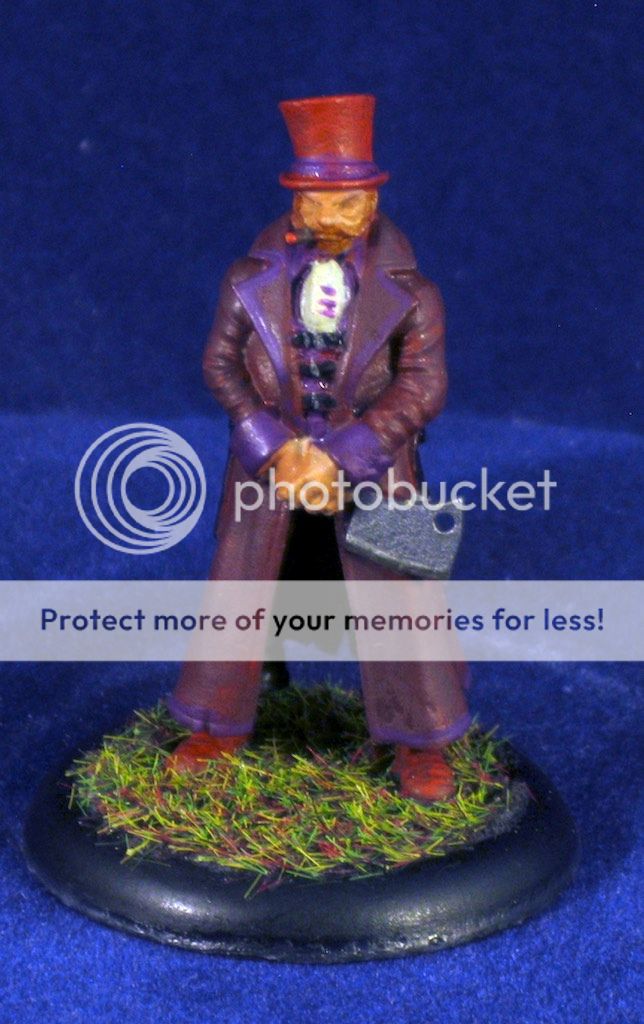
I was unsure about keeping Lynch in the list of my favorite masters because while I enjoy playing him it took a little more thought as to why. What was it that Lynch brought to the table that outweighed Zoraida, Lilith, Kaeris, Misaki, or Kirai? I really enjoy playing all those masters as well, although I would start to rate some further down the list for me than I expected. Lynch really grabbed the final place on this list (and he is the only one who is in any kind of "Order") heavily because of his mechanics. Lynch strikes me as a vanity project that Keltheos (Dan Webber) and Nerd Elemental (Dave Bowen) used to truly show what fantastic game and model designers they are. Jakob Lynch works in the game without actually ignoring any of the mechanics of the game and yet he "twists" every mechanic he interacts with. This is such a cool way to play that it has truly grabbed me, and is probably the second coolest thing I have found in the Storm of Shadows book. Jakob still cheats like other models, but gets to cheat last. Jakob still has a hand like other models, but has ways to greatly increase his hand. Jakob uses the Red and Black jokers just like everyone else, but he gets an extra red joker. Jakob even has a totem, but his totem/master relationship is reversed from how that normally works in the game. Jakob was built to have fluff to completely support this twisting of how he interacted with the mechanics, and then you feel how he works throughout playing him. For these reasons he is an utter enjoyment to play, and deserves a spot on my list of favorites.

    Friday, May 3, 2013

    What I love about Malifaux Classic Part 2


    What I love about Malifaux Classic Part 2

    There is an awful lot I love about this game.  I started writing this article about the aspects that really resonate with me and realized the list was actually fairly long. Apparently I have a lot to say, which should not be as surprising to people as it seems to be. Even my lovely wife said it was strange reading my blog and seeing me write about an emotional attachment to a game. To be honest, this game has become an important part of my free time enjoyment, not really leaving much space for other games. I play competitively and I play casually, both of which I enjoy a great amount. Malifaux is my Tuesday Game Night mistress, and I have even been able to travel to play the game. I have recieved a series of comments from various sources including email, blog comments, and twitter and I really appreciate all of them. I am still finishing up the third post for this series and want to get that done overall. I promise to add some additional comments at the end of that part along with a follow-up article next week regarding some of the feedback.

    That said, in this portion of the series I talk about some of the aspects that I love but some others push back on.

    Complexity
    Malifaux Classic is a complex game, and this is a good thing. As a Henchman for Wyrd, I had the task and privileged of introducing new players to the game and teaching them how to play. I have been blessed with a young daughter who became interested in the game and asked me to teach her how to play as well. Those who are developing Malifaux V.2 have decided that complexity is a bad thing and needs to be burned down with fire. This is something that really disappoints me. Malifaux was not a tough game to learn, with lots of people capable of learning the rules themselves. The first rulebook was an absolute nightmare to try and learn a game from, but it was something that people clearly overcame and the community grew. I am certainly not going to say the game could not use some cleaning up, it could use a fair amount as shown by the errata's released through the years. I enjoyed the complexity in the game partially because it set Malifaux apart as a more mature miniature game. This was not a kids game and was not a simple game, but was a game where you would need to spend a little time to really grasp. I experienced many demo's where I demonstrated the very simple and straight forward mechanics of the game, consisting of Action Points (AP), move, shoot, attack, interact, cast. These simple portions of the game then built on each-other with the characters in the game, each able to enhance or break some rules of the game to do something amazing. The longer players played, the better they became at the game, the more they enjoyed the game. There is a magic to playing complex games and mastering a new skill level to playing. There is a balance to winning a game because you have learned it better, not because you bought the more expensive model and put it on the table. Those are the strengths of the complexity of Malifaux, and those are the portions I enjoyed. Much of the minutia needed to be cleaned up, but that minutia was really only an issue at the highest levels of player skill, and often came to light from the tournament scene.

    Combinations
    Malifaux Classic is also a game of combinations, which is such a cool aspect to the game I think many people reference it but do not truly grasp the nature early on. There are certain combo's in 40K or WHFB that people learn and make use of, and these are something people really enjoy about those games. The best players in Warmachine and Hordes learn the strongest combo's and then repeat those to gain advantages in game. In Malifaux, every model in the game adds a new permutation of abilities that create new combo's. This is something that worried many people because they were afraid they could not master ALL the combo's in the game. I believe they were correct, they could not master them ALL. What I love about this aspect of Malifaux is that there were always new combo's to learn. Adding those new combo's to your virtual bag of tricks was one thing that advanced a player up the skill ladder of the game. It also gave constant wow moments to players. I have played a lot of games, to the point I would guess I have played more than most other Malifaux players in the world (at least in the top 5%). Even with this immense scope of Malifaux games and experience across different crews, I still learned a new trick as recently as Adepticon 2013. That trick (Thank you to Doug LeSavoy) was with a Master I was very familiar with and just had not picked up on. That was such a cool moment for me that I could not wait to try it out in one of my own future games. Those type of wow moments provide a "puzzle solving" type experience for me in Malifaux. This is something I saw on Turn 3 of that first game, and something that persists to this day.

    Objective based
    I have talked about this a lot on the podcast and point it out in every demo I have performed. Malifaux is the first truly objective based game I have experienced, and its such a refreshing and mature way to approach a game. Malifaux is not a cooperative game, it is still based on conflict between crews and there is still combat that occurs in essentially every game. The real difference in Malifaux was that there were far less gamers where the number of models you killed, or even the specific model you killed, actually determined success or failure in the game. This was something that was not only embraced in the game design (via objectives) but also in the model design. There was entire crews which were not highly effective at killing, but could move so quickly or perform specific tricks in such a way that killing was not necessary. This is such a cool part of the Malifaux Classic game and really drew players. This is the first and only game I am aware of where entire crews could be built around evasion or control and be effective in the game while not necessarily attacking with weapons or such.

    Game Balance
    I found Malifaux to be incredibly well balanced as a game through my time playing it. There were certainly areas of issue, with some specific combinations being over powered or some specific Masters being too easy to use for the "average" player but requiring a higher level of skill to counter. There were even some negative play experiences in the game with certain crews and masters that turned people off to the game. I constantly heard that the game was unbalanced, but truly and completely disagree with that assessment of the game. Malifaux is balanced for the strategies in place on a faction to faction level. Individual models are not equal, and individual masters are not equal. Each model and master is looked at in a vacuum and then looked at in the crews they would be hired into to see how they work overall. This is why a 5ss showgirl in a Collette crew is far different than a 5ss Ronin. Certainly some models slipped through the play testing process and were more or less powerful than others, but when looked at from a faction to faction standpoint, the game was incredibly balanced. Furthermore, the game was built around choosing your models to play after you knew what your game objectives are. Then a secondary set of lesser objectives was completely chosen by the player to fit the crew he or she had already hired. There were certainly problems (such as the Guild faction as a whole having less AP), but in my opinion the game was far more balanced than other games where the latest release was always the best choice to play the game or a Space Marine was always better than other choices.

    Fate Deck
    A podcast I listen to is often quoted for the phrase one of the hosts uses a lot, that phrase being "Innovative Mechanics". Malifaux did away with dice for and instituted a new mechanic for their game using a deck of playing cards. This is such a nice departure to me, and something I love about the game. I can honestly say I have become stuck on this idea even when considering designing my own miniature game, and I just love the deck idea. A deck of cards provides a fantastic dynamic in the game through some randomization that is "controllable", removing the completely random element of dice rolling. This allows a player to make decisions based on how the turn has progressed for them so far, and means that only so much good or bad luck can exist in a specific period of time (that period being the time it takes to require your deck to be reshuffled). Added to this is a players hand of cards which allows them to "cheat" in game and manipulate how their models are impacted in the game. It's such an elegant mechanic to the game which has been incredibly well implemented. My friend Trevor prefers dice to cards, and I cannot figure out or understand why.

    Avatars
    Avatars have received a pretty bad review when all things are looked at with Malifaux. They are not universally utilized within games and they are a real mixed bag when it comes to their design in the game. All avatars are not made equal and this shows across the game. Personally I really like the Avatars and feel they bring an added dimension to the game that I enjoy. At one point in a discussion I was told that the Avatars were not intended to be in every list, but were a nod toward differentiating between Malifaux the Basic game and Malifaux an Advanced game. Avatar manifest requirements are intended to add some additional complexity in the game, while at the same time attempts were made to balance the Avatars against existing non-avatar masters so the game balance would not be thrown off. I have certainly enjoyed playing with the Avatars I have gotten painted, and plan to continue to expand my Avatar collection and get them on the table. Even the ones such as A-Colette that do not seem at all competitive to me seem to be a lot of fun and are something I want to play around with!

    **With that I am going to make a cut here and post part 3 on Monday. The article has become very long and I still have about the same amount to say in the final portion as well. On top of that I am out of the more controversial areas of the game which I love but others may not. Check back Monday for the final part.

    Thursday, May 2, 2013

    Malifaux V2 Announced - Changes Incomming

    Well, the announcement has shown up and the community is buzzing about the incoming Malifaux V2. Those of you who did not get a chance to read the Wyrd newsletter you can find it here:

    http://www.wyrd-games.net/Newsletter_v2/2eNews.html

    There are a number of podcasts that are also releasing interviews with Mack Martin and Justin Gibbs, the two new designers of the Malifaux game. I have to admit that its nice to see, after posting my previous article, that Wyrd decided to reach out to Malifaux podcasts to provide some interviews to the core playing audience for this big change. In many cases, the Malifaux podcasts beat the non-malifaux outlets to the punch on releasing the interviews in conjunction with the announcement.

    Here are some of the places the interviews can be found:

    As I understand it, more interviews are coming on other outlets as well, so keep an eye on the interwebz folks. As mentioned, there seems to be only one place there will not be an interview, and that's Gamers Lounge. This is my own choice, as I am very unhappy with what I have seen of V2 and chose not to do an interview with EricJ this year because of the back and forth I have had with him (and Mack and Justin) on this topic. While I admit it would have been nice to have been asked if I wanted to do the interview, I think Eric, Mack, and Justin are all pretty clear on where I stand. As such I understand why I was pointedly left out.

    Moving Onto the Article

    All of that said above, I am not really focusing on that in this article. I really wanted to follow up the last Article (Surviving Adepticon 2013) with some writing about the high points of my games at the Masters and Avatars, along with a series of articles with my overall thoughts on the Competitive Malifaux scene. I wanted to.

    To be honest, the announcement of V2 has spun me back to being off kilter and upset over the changes again. Do to this, I have lost my focus on the games and I am not sure if I will get back to writing up that small series or not. I am currently at the point where I have seen some division in my own playing group over Malifaux V2 to the point I am no longer enjoying going to the game store on my normal gaming night. This is likely to also impact the podcast, which really disapoints me as well.

    All that said, I figured there was a better article to post at this point. I want to take some time and write about what I love with Malifaux Classic (V.1). My recent interactions with Wyrd representatives have been less than positive lately. This has been further exacerbated by my local group splintering, which has really started to decrease my enjoyment in the game. I think that setting some of those thoughts about what I love in Malifaux Classic in a post will be helpful to me, and also might be interesting to others. This is also a timely article as the upcoming Open Beta test of Malifaux V.2 will have the new rules and models in everyones hands after May 31. Having this list will help me take a closer look at what I might consider both good and bad about Malifaux V.2.

    Then again, maybe this is going to be passed over to the dark depths of the ignored internet. It's a vanity project (the blog that is), but I have the keyboard to type and type I will.

    What I love about Malifaux Classic

    There is an awful lot I love about this game. Starting with my first demo game of Malifaux there were portions of the game that grabbed me. This feeling only grew as I played more and expanded my collections of models. My first demo game was set-up between Jay and I with Jay setting up Nicodem and some zombies while I was handed Perdita and her family of gunslingers. The first turn was a little intimidating, trying to figure out movement, activation, AP and the cards. At some point during turn 3 things really came together for me and I fell in love. I started to read abilities on the cards like Companion and figure out the combo's that would work. I started to really feel the character of the models in how their rules worked together to create a complete package. It took a couple more games, but I knew there was something magical in this game after the end of that turn 3. I'm not sure if they knew it, and I am pretty certain Jay doesn't want the credit, but Dan and Mike answering questions and mostly Jay playing through that demo really gave the start to the game that has defined the last 3 years of my gaming life. June 2010, that demo really changed things for me.

    So, looking back over the game that will be consigned to extinction this coming Gencon 2013, what are those things that still make me love the game? What are those things in Malifaux that I want to see in any other miniature game I am going to fall in love with?

    The Models
    This is a pretty simple one, but its important as well. Wyrd's miniatures really hit a asthetic for me that I truly prefer. This is the first game I have seen where the majority of the minis in the game are ones I think look good. Overall I have very few models in the Malifaux line that I do not like the look of. Overall I am not a fan of undead models, so the bulk of the Reserectionists do not strike my fancy.  I do love the spirit models and the hanged however, and like some of the new models getting released from Storm of Shadows. As a whole, I even like the look of some models which I do not actually prefer to use in game. I have no love for Outcasts in general, but I really like the look of several of the models for Leviticus' and Viktoria's crews. Wyrd's move into plastic was a great move in my opinion. The models are maintaining or increasing in detail overall, while becoming much easier to work with overall. I have to say, I am really looking forward to the new Malifaux models to come.

    Skirmish Game
    Malifaux is a skirmish game, which is not something I truly understood until I played the game.  I moved into Malifaux from an Army Scale game, Warhammer 40K and Warhammer Fantasy. The idea of playing with less than 50 models on the table was not something I had even considered prior to seeing Malifaux. Even the GW Lord of the Rings skirmish game was something I was never interested in. Once I was introduced to the mistress that is Malifaux, I learned about the joys of small numbers of models on the table. I even love this over other games that took on a skirmish moniker such as Privateer Press's Hordes and Warmachine. Malifaux is truly balanced around being skirmish sized with only 5-10 models on the table. Even the horde crews such as Gremlins and Reserrectionists would typically field less than 12 models total, with many of them being easily kill-able. Having this small amount of models on the table really opened up a couple different aspects of the game which added to its strength for me. First, I could focus on painting a small set of models as well as I could (for me, I was happy with Table Top Quality). This allowed me to be very comfortable in only playing with fully painted and based crews, which I really enjoy. Second, it made the entry into the game very reasonable. I could get started playing the game regularly after only a couple nights painting and be comfortable with having a "full crew". I was playing full sized games while still growing what ended up becoming a massive collection. Lastly, this means that every model in the game has some meaning. On the one hand, they have meaning because there are not really any "line troop" type models that are just there for chaff. On the other hand, each of the models had a lot of character and that leads to my next love.
     
    Character Driven Game
    Malifaux is a Character Driven game. Each model in the game had a story and a character behind putting it on the table. Even the swarm of gremlins each had character built into not only their models, but supported by their rules. There were still line troops in the game such as Death Marshals, Ronin, Bayou Gremlins, and Steampunk Arachnids, but they did not feel like a swarm of faceless chaff. Rarely were these models taken in large numbers, and each had a set of rules that made them work really well together with your crew. The models and their special combination of rules built upon and supported their role in the Malifaux world. This character and feel was only further expanded and strengthened as you moved to non-unique rare models, through unique named models to Henchmen and Masters. There has been some commentary that many models got too complex with multiple rules, and even I agree with that to some extent when I look at a model like Mei Feng. At the same time, these rules all built together to create a complex picture of a very singular character represented in a model. Each rule contributed to a better and clearer picture of who and what that model was in the world of Malifaux.

    **I'm realizing this article is growing fairly lengthy, so I figured I would split it over a couple days. Herein ends Part 1, with What I love about Malifaux Classic Part 2 returning tomorrow.